

The House That Wouldn’t Let Go
8 minute read
Listen to this post — 8:01 minutes
What habit, memory, and brand inertia can teach marketers about real change
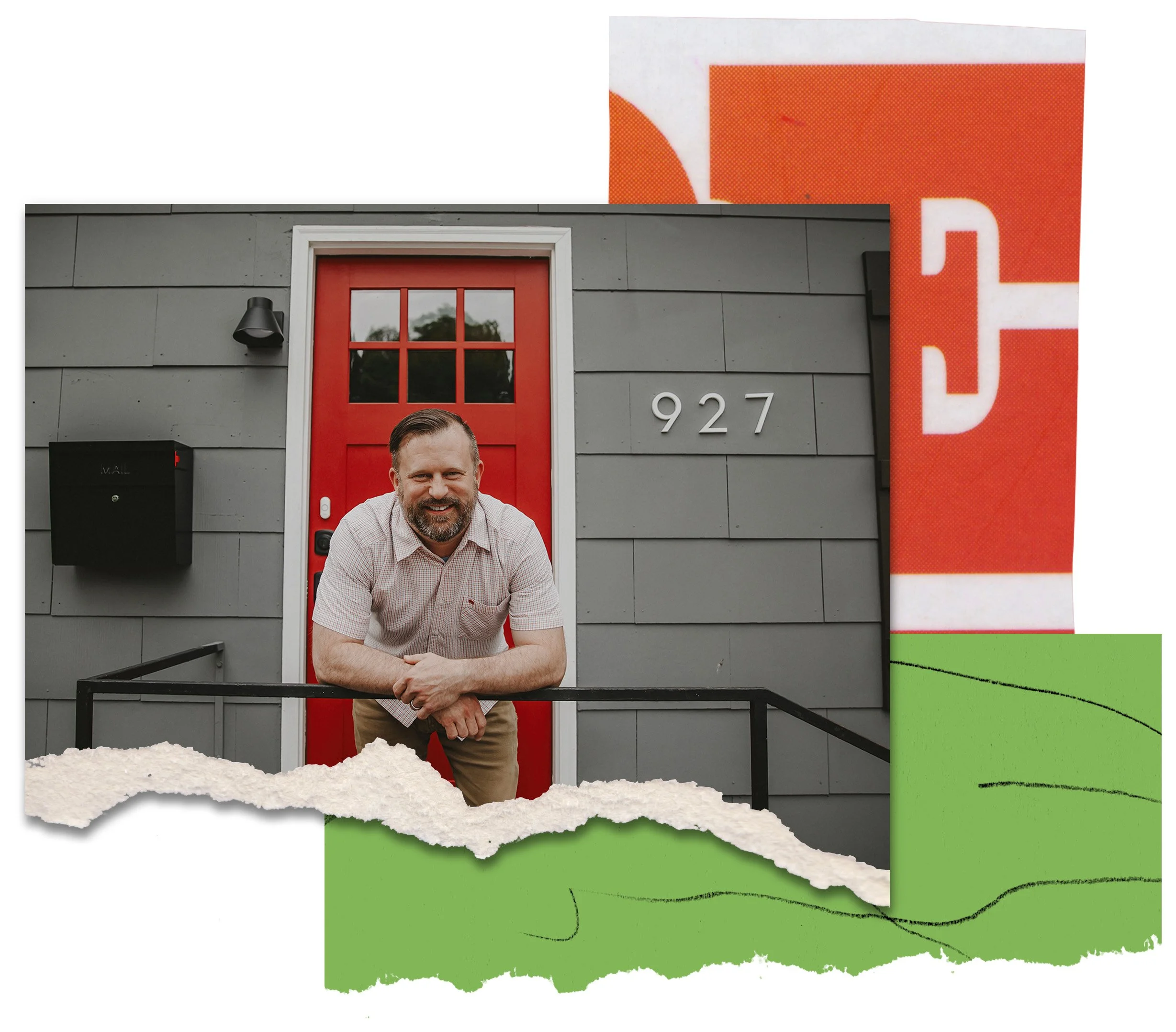
In the fall of 2024, I bought my office building. It’s a small house. Unassuming. Residential in scale, but commercial in intent.
Before I moved in, it served as the administrative offices for programs hosted by a church across the street. More than that, it was a node in the community: support programs, donations dropped at the door, meetings held, people in crisis spending a day (or night) inside. A safe place. A familiar place.
When the previous tenant moved out, everything changed as I made updates to make the office my own. New exterior colors and doors. Landscaping, lighting, signage and storage. (You get the idea.)
Friends complimented me on the move. Said the house looked good. Some stopped by for a quick tour.
Structurally, it was the same house. Perceptually, it was not.
And yet, people I didn’t know kept showing up.
They knocked on the door to attend meetings that no longer existed or had moved. They wanted to leave cases of bottled water for programs I knew nothing about. They asked where dinner was being held.
Even when I — a complete stranger — answered the door and explained that the nonprofit had relocated to a new building they’d purchased, many of my visitors struggled to process it. The information landed, sure, but it didn’t stick.
They had been here before. They knew this place. Their brains had already decided what the house meant.
That experience has stuck with me because it’s one of the clearest, most human examples I’ve seen of how habit, memory, and meaning overpower signals.
And it’s a perfect metaphor for marketing.
The Real Opponent Isn’t the Competition. It’s the Past.
One of the central ideas in the book The Power of Habit by Charles Duhigg is that behavior is governed by loops:
Cue → Routine → Reward
Once those loops are formed, they don’t disappear. They lie dormant, waiting for familiar cues to reactivate them.
The house? It was a cue.
No matter how much we changed the surface-level signals, the habit loop people had formed over years of interaction remained intact. Their brains filled in the gaps before new information could compete.
This is where marketing leaders often misdiagnose their challenge.
They think:
“People don’t understand our new positioning.”
“The rebrand didn’t land.”
“Our audience isn’t paying attention.”
More often, the truth is simpler…and harder. People are paying attention. They’re just filtering reality through what they already believe rather than what they see.
Familiarity Is Comfort. Comfort Beats Novelty.
The Cracker Barrel logo debate becomes instructive in moments like these.
When the restaurant chain flirted with visual updates, the backlash wasn’t really about design quality. It was about emotional permission. People don’t go to Cracker Barrel to be surprised. They go there to remember. Road trips, family meals, predictability.
Oscar Wilde famously said the only thing worse than being talked about is not being talked about. That’s true…unless you’re a brand whose value is rooted in emotional continuity.
Cracker Barrel got a quick lesson that many brands forget: Disruption is not inherently valuable. Relevance is. And relevance often lives inside of habit.
What This Means for Marketers (and Why Strategy Alone Isn’t Enough)
If you’re a CMO or senior marketing leader, you’re probably carrying at least one of these tensions right now:
You need change, but your audience resists it
You’ve invested in new positioning, but behavior hasn’t followed
Your brand is “clear internally” but sticky perceptions won’t budge externally
This isn’t a failure of creativity or intelligence. It’s neuroscience.
Duhigg makes this clear: lasting change doesn’t come from erasing habits. It comes from redirecting them.
That’s where marketing strategy and design have to work together, not sequentially.
Strategy Without Design Can’t Break Habit. Design Without Strategy Can’t Redirect It.
At Fifth Letter, this is why we don’t separate thinking from making.
Strategy identifies:
The existing habit loops in your market
The emotional rewards people are protecting
The cues they subconsciously respond to
Design operationalizes that insight:
Through signals that feel familiar enough to be trusted
While introducing just enough difference to invite reconsideration
Over time, not all at once
This is how anchors get lifted. Not by force, but by replacement.
It’s the difference between shouting “We’re new!” and calmly proving “This still works, but we’ve made it better.”
What Can You Learn From a House That Wouldn’t Change?
If you’re sitting in the marketing leadership chair, here are a few takeaways worth pressure-testing inside your organization:
1. Audit the Habits, Not Just the Touchpoints
Ask yourself:
What do customers assume about us before they see anything new?
What emotional reward are they getting today that they don’t want to lose?
If you don’t name these, you’ll design against them accidentally.
2. Repositioning Is a Process, Not an Announcement
People didn’t change their understanding of my building until I:
Explained who I was
Clarified what changed
Gave them a mental map for where the old thing went
Brands need the same narrative hand-holding across channels and over time.
3. Familiarity Is an Asset. Use It Deliberately.
Not every brand needs to “break through.” Some need to reframe.
The goal isn’t novelty. It’s trust with momentum.
4. Above-the-Ceiling Partners Think in Loops, Not Campaigns
Commodity vendors execute tasks.
Hybrid partners help you:
See the behavioral system you’re operating inside
Decide where to apply pressure (and where not to)
Align strategy and design so nothing gets lost in translation
That’s how you stop buying outputs and start compounding value.
A Final Thought
Our little house taught me something I already knew intellectually but hadn’t felt so viscerally: Change is rarely ignored. Instead, it’s resisted quietly, politely, and predictably.
The job of marketing isn’t to shout louder. It’s to understand the habit, respect the memory, and design a better next step.
That’s work I love, and that’s the work Fifth Letter does.
I’m always interested in conversations about productive partnerships. That’s a pretty good habit to have.
Thoughts? Questions? Let me know.
Elliot Strunk, an award-winning designer and strategist with 30 years of experience, is the Creative Director and Principal of Fifth Letter.
You can learn more about him here.